Waste auditing, from planning to reporting
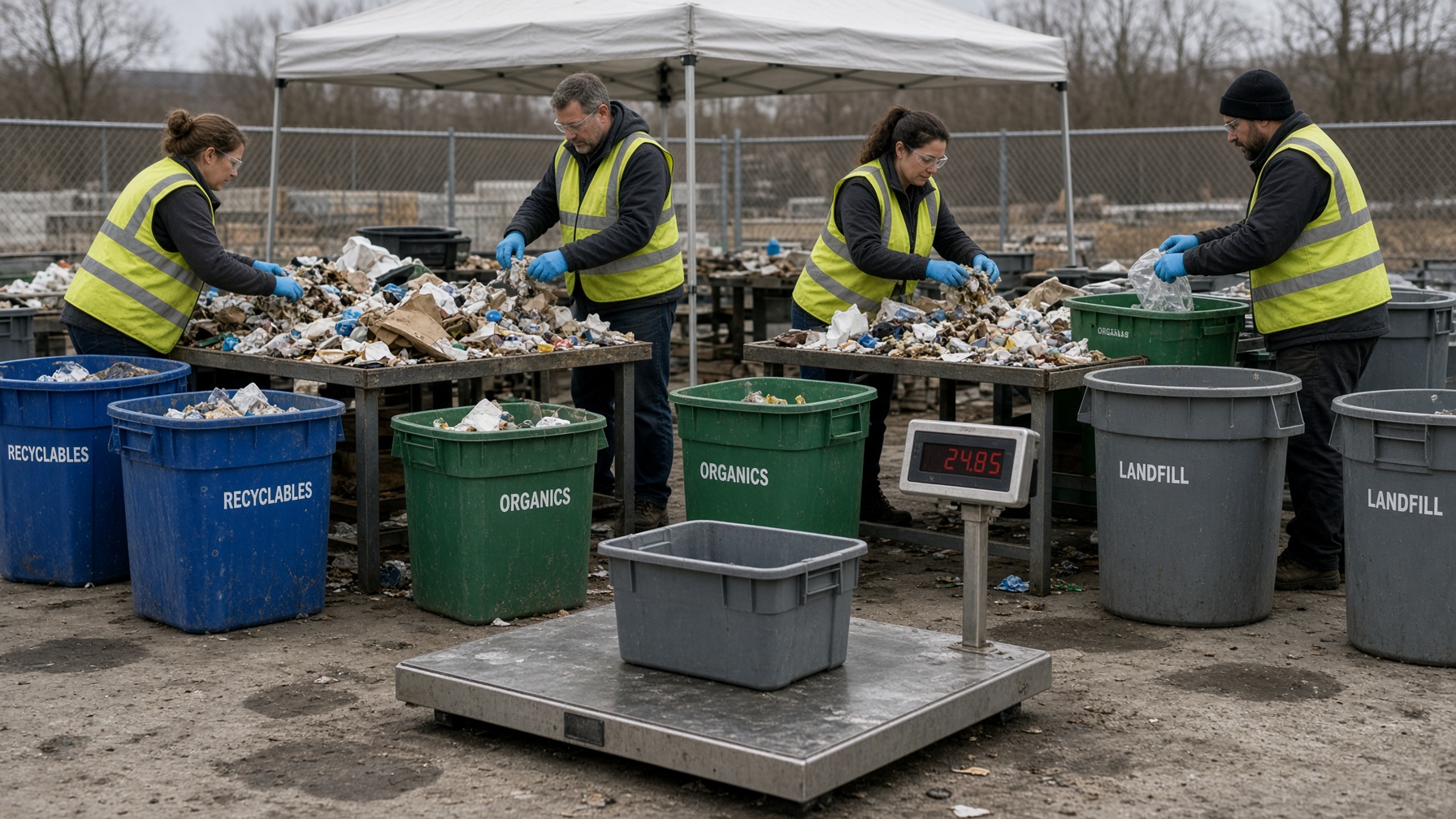
A waste audit replaces guesswork with measured data: what your organization or community actually throws away, in what quantities, and where it should have gone instead. This guide walks through the full process — planning, sampling, sorting, weighing, analysis, and reporting — at the level of detail you need to actually run one.
Facility & ICI Audits
Offices, schools, hospitals, retail, industrial sites. Audit a building's waste over a defined generation period to find diversion opportunities, right-size contracts, and meet regulatory requirements.
Curbside & Residential Studies
Municipal composition studies across sampled households or routes, often across multiple seasons. Measure set-out, capture, and contamination rates to design and evaluate diversion programs.
This guide is a project of the Circular Innovation Hub at York University. For questions, collaboration, or to report a correction, contact Dr. Calvin Lakhan or Larry Meloche.