Equipment & Site Setup
Reliable results depend on field logistics. This section specifies the complete equipment kit — with capacities, quantities, and the reasoning behind each specification — and the site requirements and layout that keep material moving in one direction from tipping to sorting to weighing to disposal, without cross-contamination.
The kit at a glance
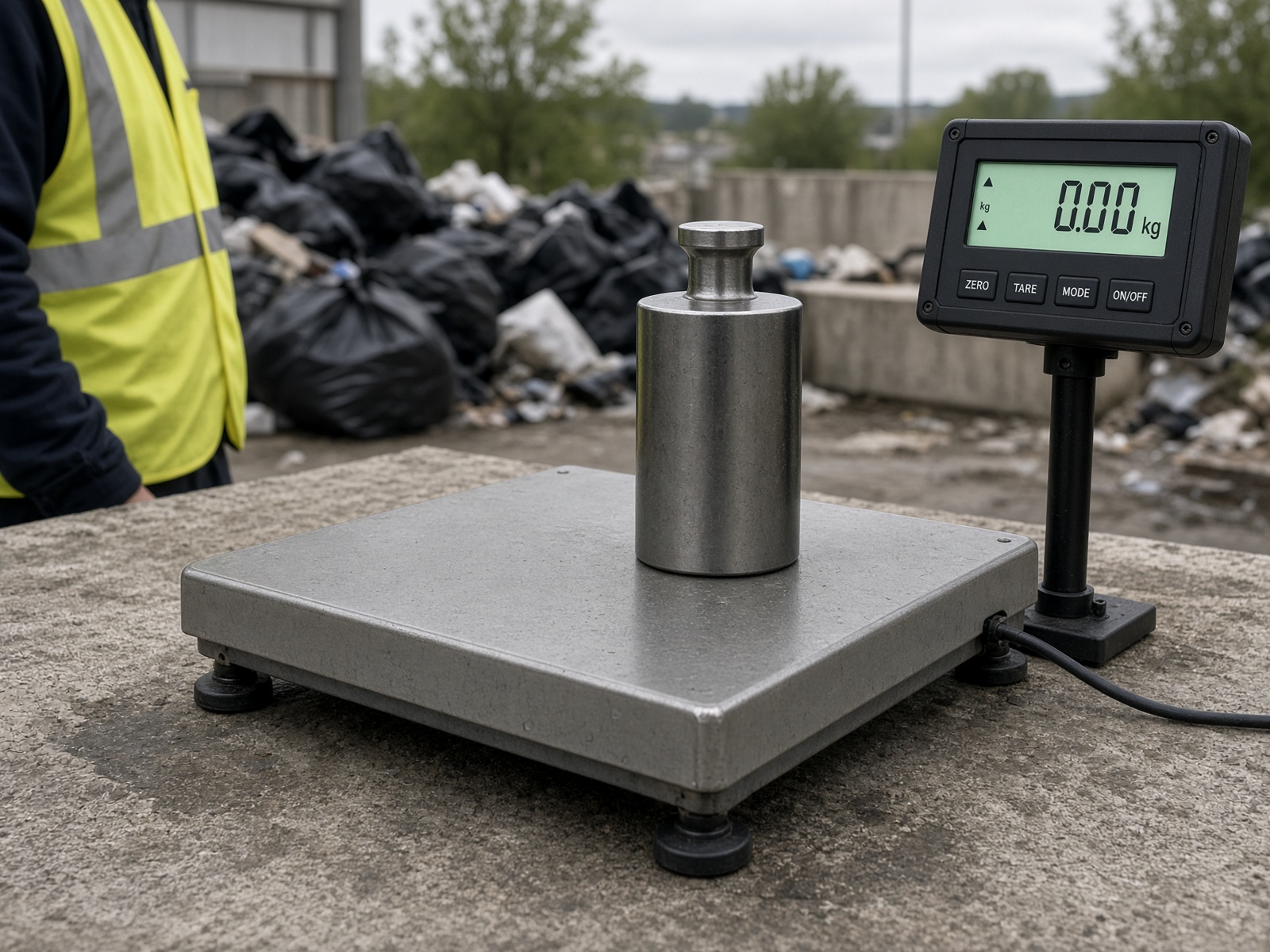
Platform scale
Weighs every sample and category container; verified against a check weight through the day.
≥150 kg capacity · ≤0.05 kg resolution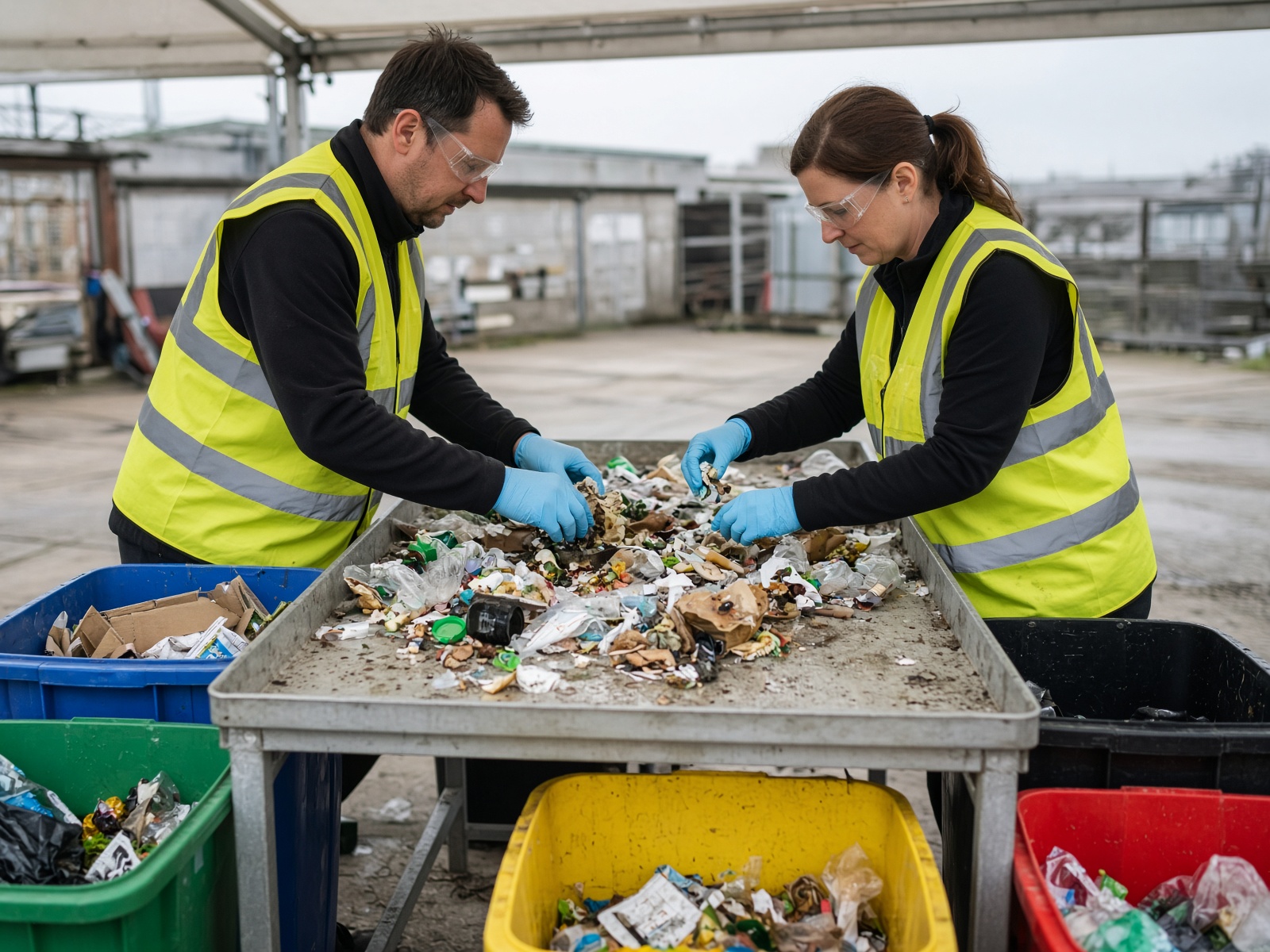
Sorting tables
Waist height, rimmed edges where possible, washable surface; one table per 2–3 sorters.
~90 cm height · 1.8–2.4 m length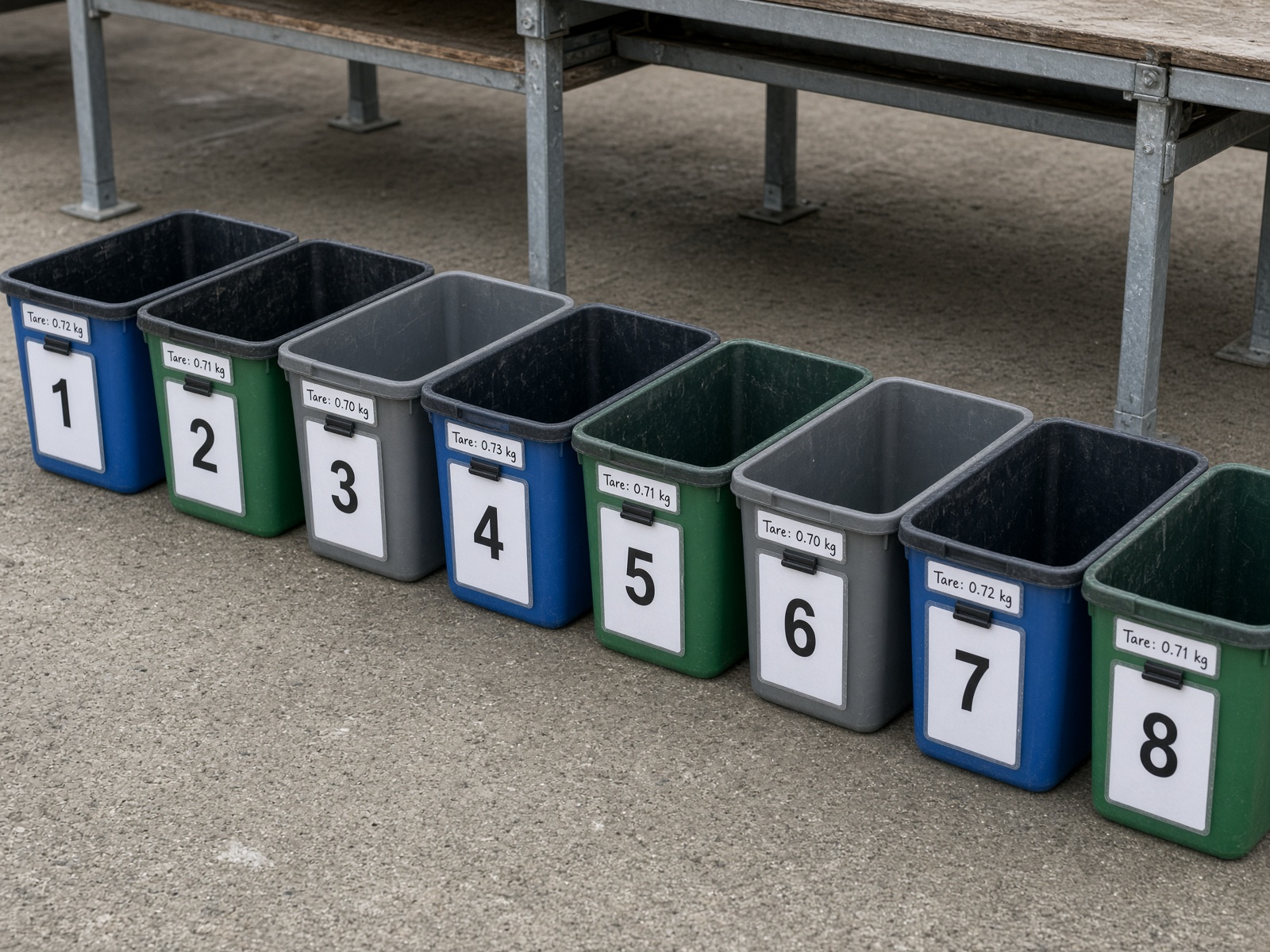
Category containers
One numbered, tared container per sort category, colour-flagged by stream.
tares logged before sorting begins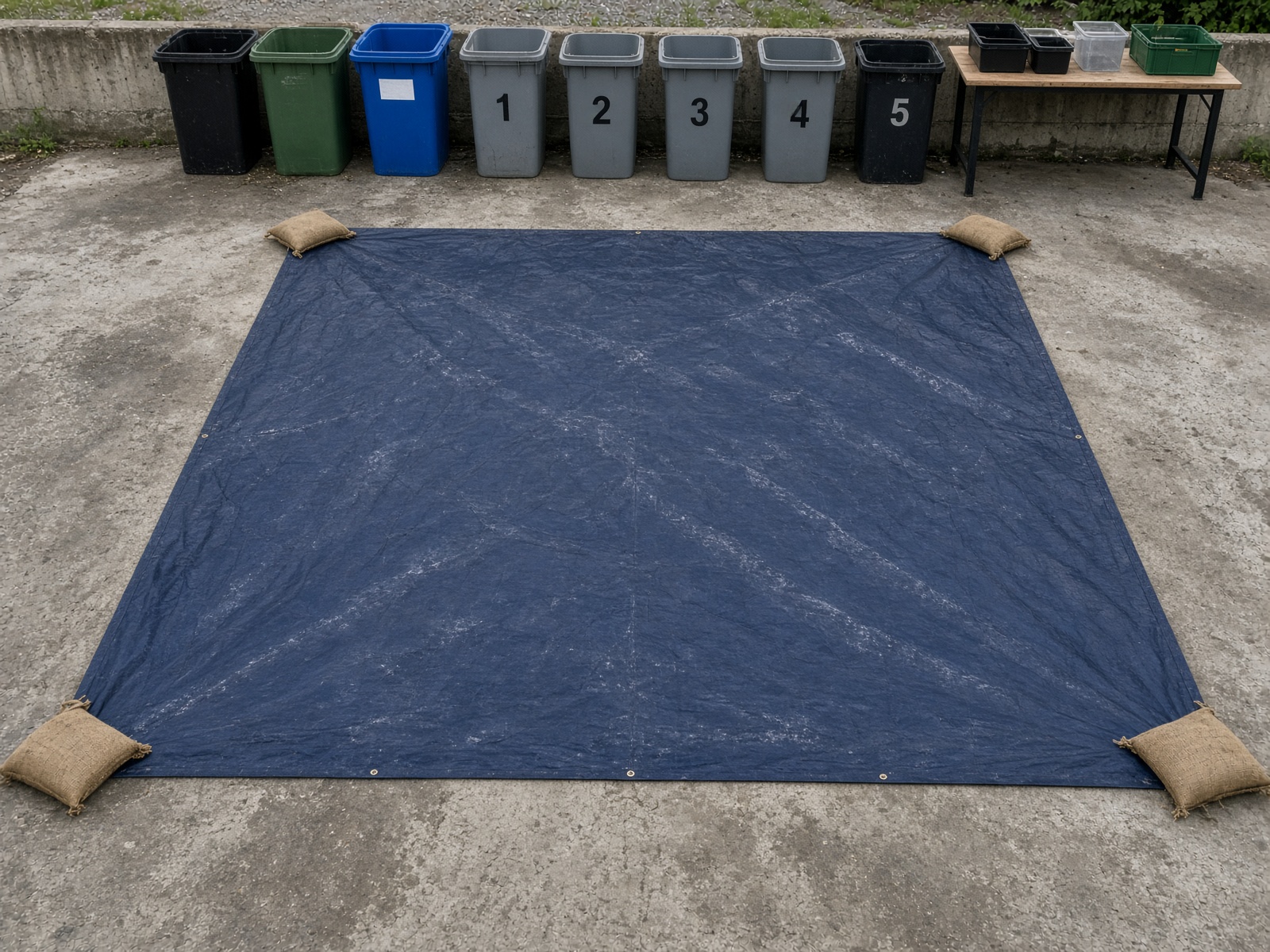
Heavy tarps
Tipping surface, ground protection, and cover for weather or overnight holds.
≥6 mil · 3 minimum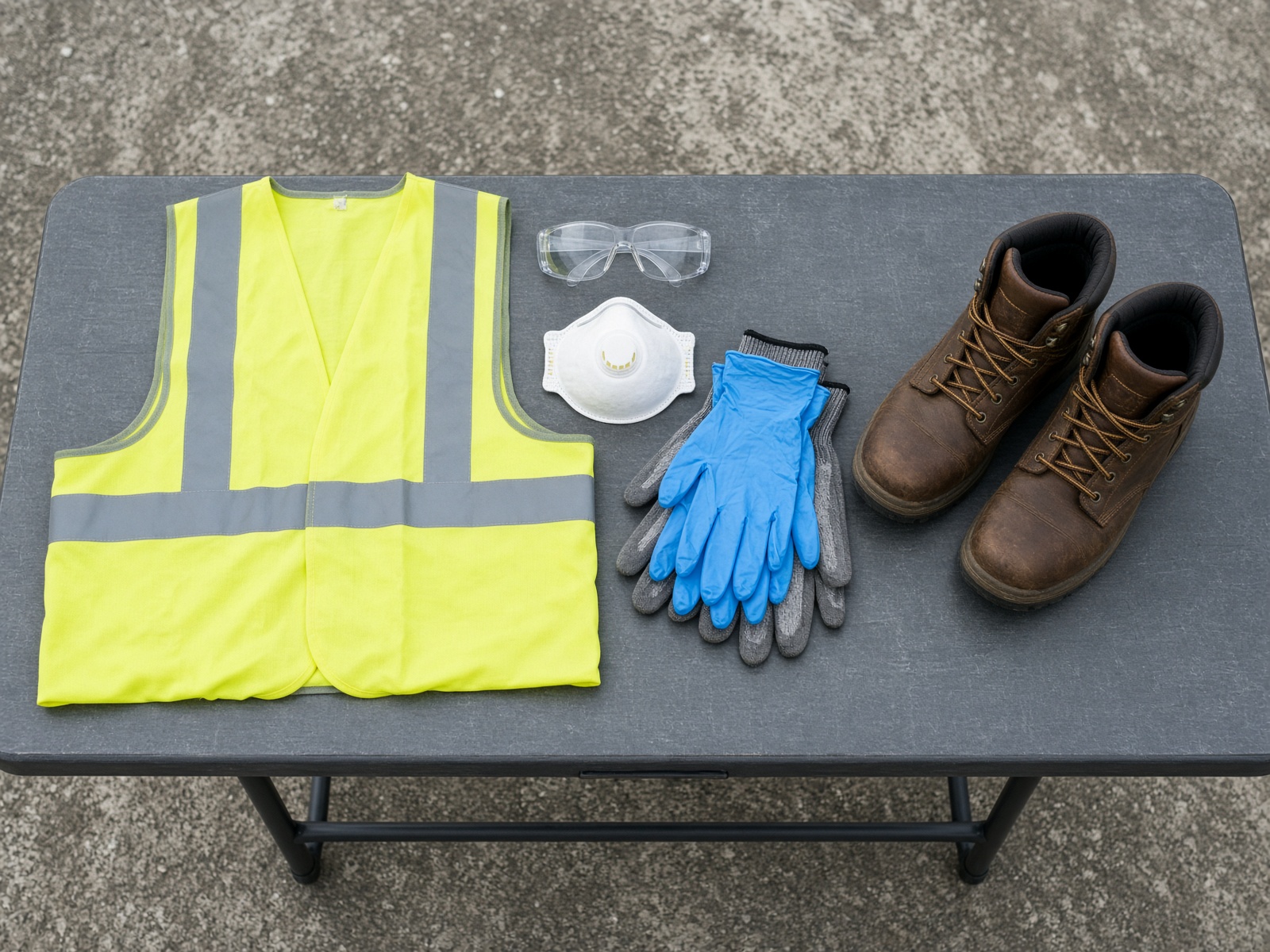
PPE (per person)
The full standard specified in §04: layered gloves, eye protection, hi-vis, footwear, respirators where indicated.
see §04 for standards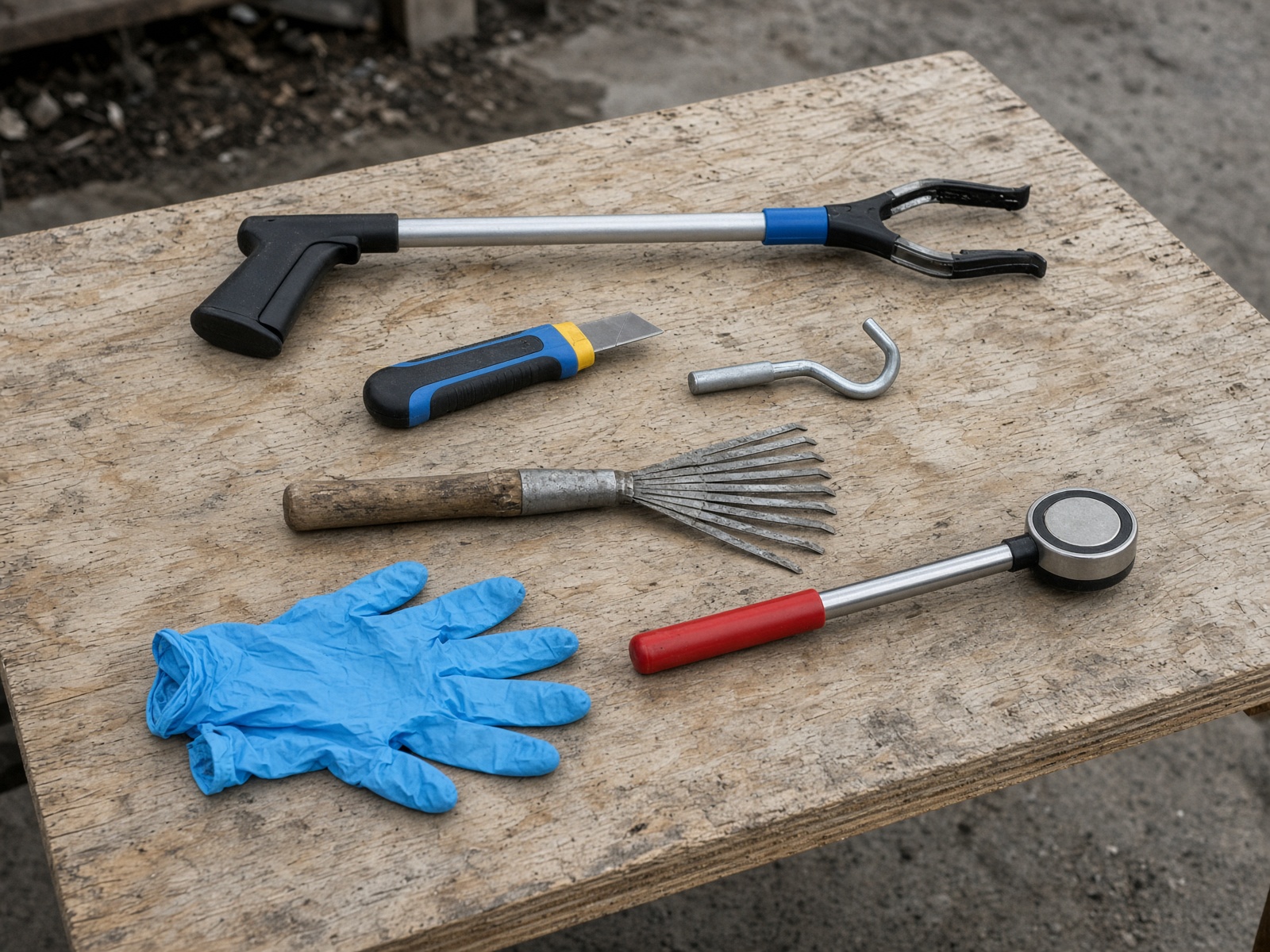
Hand tools
Tongs and grabbers, safety cutters and bag hooks, rakes and shovels, broom, magnet wand.
tongs: 1 per sorter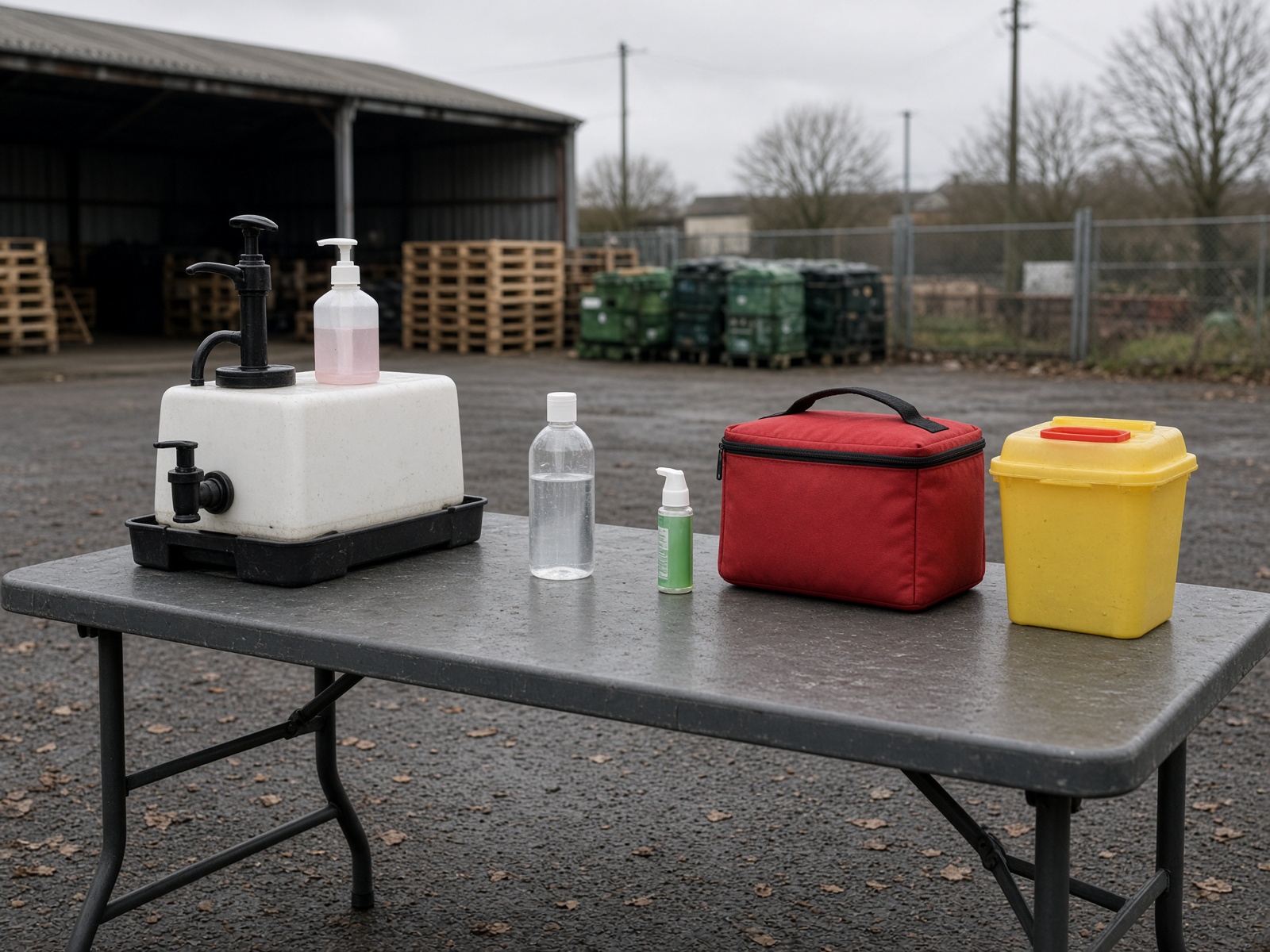
Hygiene station
Handwash with soap and water, sanitizer, eyewash, first aid kit, sharps containers.
positioned away from tipping (§04)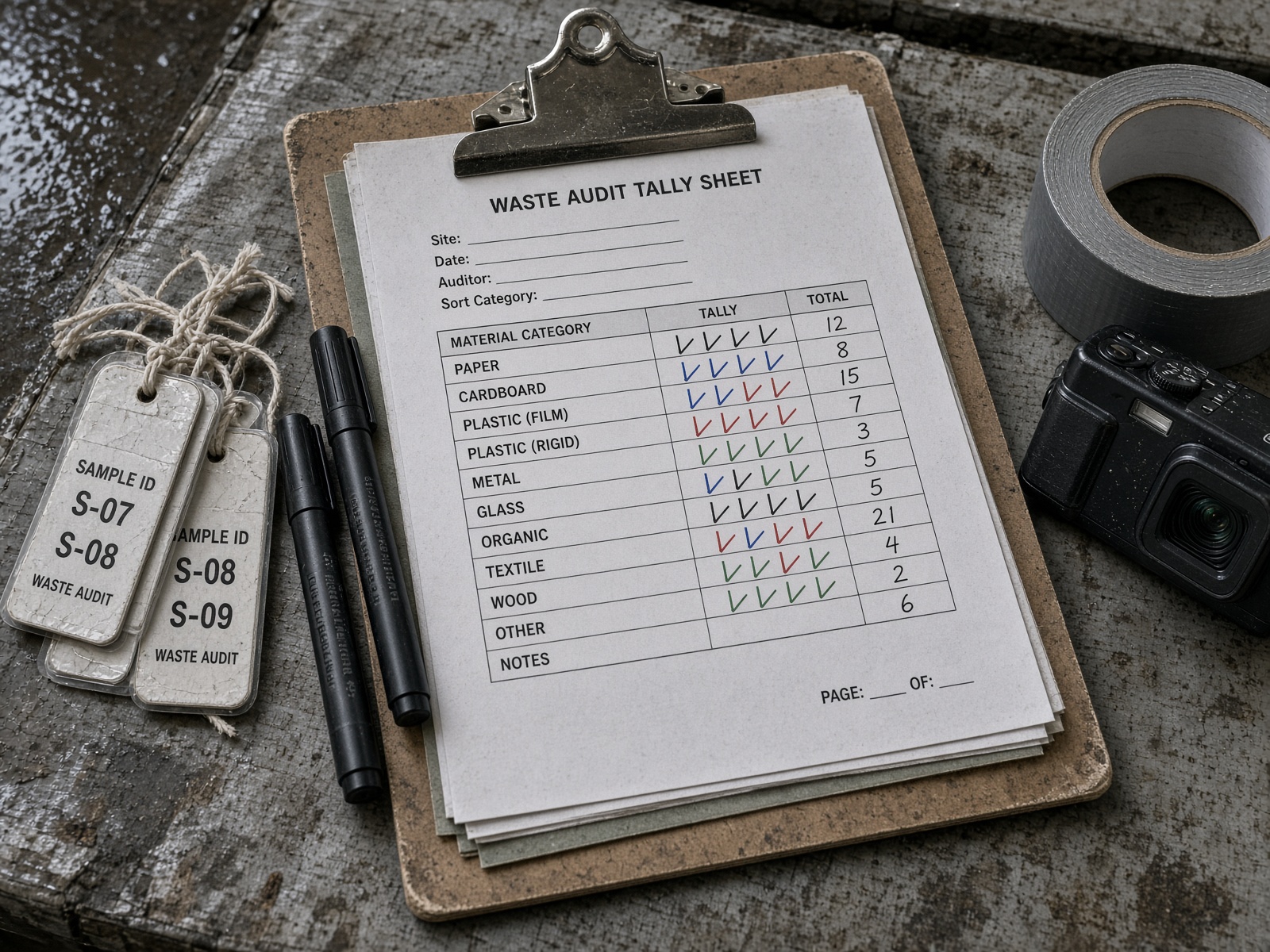
Data kit
Printed forms, clipboards or tablet, sample tags, waterproof markers, camera, duct tape.
forms F-00 – F-07 (§08)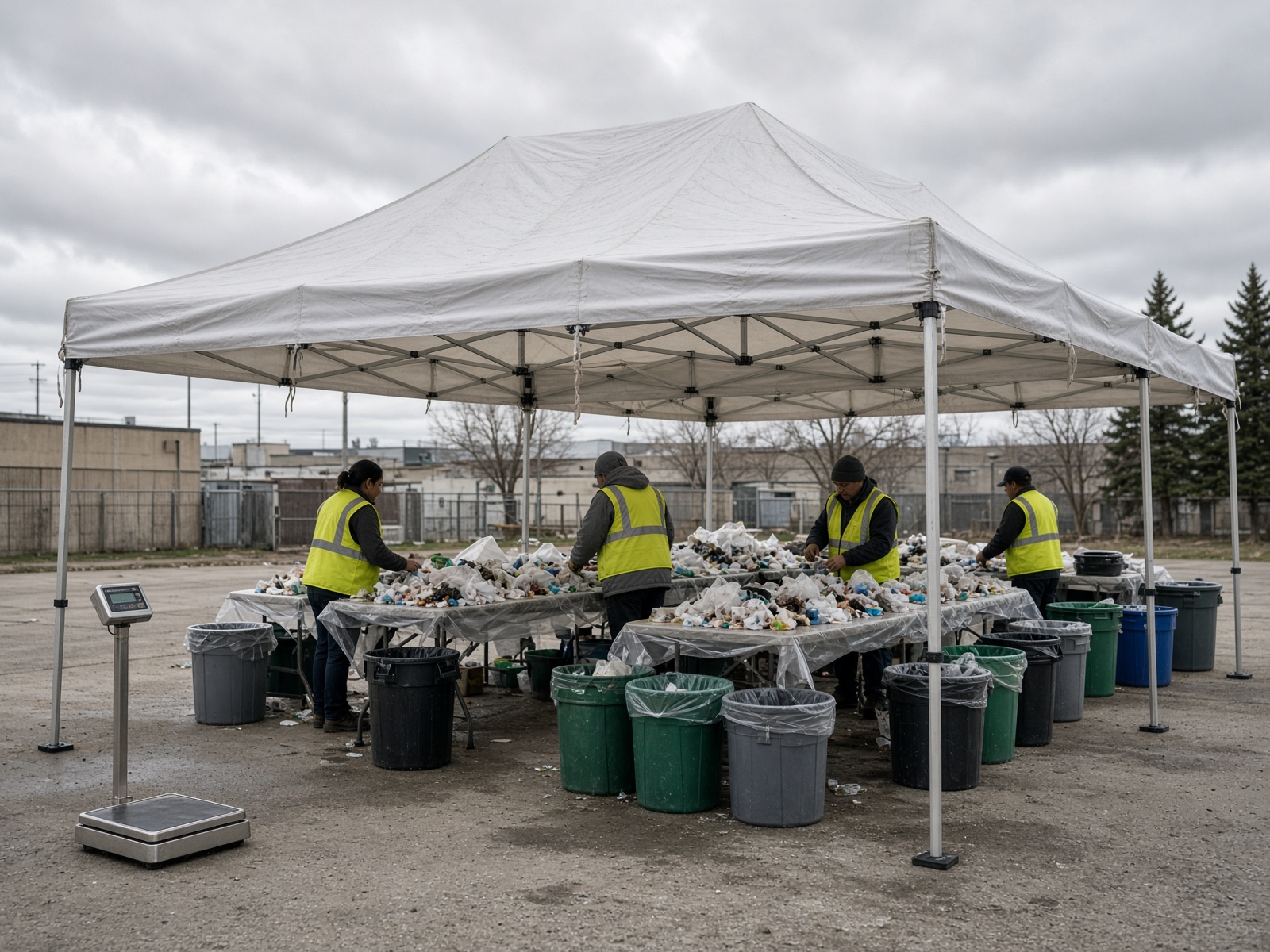
Shelter & power
Canopy tents for outdoor sorts, lighting for indoor or early starts, extension power or battery bank.
weather plan decided in advance (§04)The full checklist
Quantities below are sized for a standard crew of four to five (supervisor, three or four sorters, with the weigher role rotating) sorting one to two tonnes per day. The printable version, with checkboxes and a packing column, is form F-08 in the resource library.
| Group | Item | Specification / notes | Qty (4–5 crew) |
|---|---|---|---|
| Weighing | Platform scale | ≥150 kg capacity, ≤0.05 kg resolution, battery-powered, stable on rough ground | 1 (+1 backup) |
| Check weight | Known mass, 10–20 kg, used for the daily verification procedure below | 1 | |
| Hanging/crane scale | Optional, for bagged samples where a platform is impractical | 1 | |
| Sorting | Sorting tables | ~90 cm working height, washable surface, rimmed edge preferred; folding tables acceptable with plywood topper | 2 |
| Category containers | 44–120 L, uniform within a size class, numbered, colour-flagged by stream; count = category list + spares | ~25–40 | |
| Tarps | ≥6 mil poly, ~5 × 6 m: tipping surface, residue tarp, weather cover | 3 | |
| Contractor bags | 3 mil, for sorted material out and contaminated disposables | 1 box | |
| Hand tools | Tongs / grabbers | One per sorter; the default tool for anything not clearly inert | 4–5 |
| Safety cutters & bag hooks | Guarded blade; cutting away from the body per §04 | 4–5 | |
| Rakes, shovel, broom, magnet wand | Spreading the tipped sample, site cleanup, ferrous check on "other" piles | 1 set | |
| Safety & hygiene | PPE per person | Per the §04 standard, plus spares (gloves especially: 2–3 nitrile changes per person per day) | crew + 2 spare sets |
| Hygiene station | Water jug with tap + soap + towels, sanitizer, eyewash, first aid kit, ABC extinguisher, sharps containers (1 per table), spill absorbent | 1 station | |
| Data | Forms & clipboards | Printed F-00–F-07 with 20% extra tally sheets; pencils (rain-proof) and waterproof markers | 3 clipboards |
| Sample tags & labels | Pre-printed sample IDs; container number labels; stream colour dots | 1 roll each | |
| Camera | Phone acceptable; charged, with the photo log (F-05) convention agreed | 1 dedicated | |
| Site services | Shelter | Canopy tents over sort tables for outdoor work; sidewalls for wind | 1–2 |
| Power & light | Extension power or battery bank for scale and devices; work lighting indoors | as needed |
Scale selection and daily verification
The scale is the instrument the entire dataset rests on, and two properties matter more than price. Capacity must exceed the heaviest single weighing — a full sample container plus bin can approach 100 kg — with margin; 150 kg is a comfortable working minimum. Resolution determines the smallest category the audit can measure: at 0.05 kg resolution, a category weighing 0.5 kg carries a ±10% instrument uncertainty from rounding alone, which is why low-prevalence categories are reported as indicative (§03). Legal-for-trade certification is not required for audit work; documented verification is.
The verification procedure takes two minutes and is performed three times daily — before sorting, mid-day, and at close: place the scale on a firm, level surface (a plywood sheet on soft ground); zero it; weigh the check weight; record the reading on the tally sheet header. If a reading drifts by more than the scale's stated tolerance, the drift is recorded, the scale is re-zeroed or replaced from the backup, and weights taken since the last good check are flagged for review. Outdoors, wind on light containers is a real error source: weigh in the lee of a vehicle or windbreak, and note gusty conditions on the log.
Containers, tares, and labels
Every category container is numbered, and its empty (tare) weight is recorded on the tally sheet before any sorting begins — including nominally identical bins, whose actual tares commonly differ by a few hundred grams. Containers are flagged by stream colour so a bin's destination is visible across the sort floor:
Labels carry the category name and tier number in large type readable at arm's length, using the exact wording of the category list (§06) — improvised names on sort day produce reconciliation problems in analysis. A spare set of blank labels allows a category to be legitimately subdivided mid-audit if the supervisor rules it necessary, with the change recorded on the observations log.
Choosing the site
The sort site is chosen against six criteria: enough level, hard-surfaced area for the one-way layout below; vehicle access for sample delivery and disposal; weather protection or the space to create it; ventilation (critical indoors); water access for the hygiene station; and separation from public and mobile-equipment traffic. Indoor and outdoor sites trade off predictably:
| Indoor (warehouse, garage bay) | Outdoor (yard, parking area) | |
|---|---|---|
| Weather | Controlled; no postponement risk | Requires tents, weather thresholds, rain plan (§04) |
| Ventilation & odour | Must be verified; mechanical ventilation often needed | Generally self-resolving; consider neighbours downwind |
| Space & surface | Often constrained; floor protection required | Usually ample; surface quality varies |
| Light & power | Available; supplement task lighting | Daylight-dependent; battery or generator for the scale |
| Security (multi-day) | Lockable | Requires covered, cordoned overnight holds |
| Typical use | Winter audits; transfer-station bays; institutional loading docks | Seasonal municipal sorts; campus and facility yards |
Site layout
The layout enforces one rule: material flows one way. Nothing sorted returns toward the tipping area, and nothing unsorted crosses the weigh station. For a four-to-five-person crew, a footprint of roughly 6 × 12 m accommodates the full sequence with working clearance; smaller sites work by shrinking the tipping area and staging samples, not by compressing the gaps between stations.
Arranging the sorting table
Bin placement around each table is an ergonomic and a data-quality decision at once: the categories that receive the most material belong in the sorter's primary reach zone, so the highest-frequency movement is the shortest. Categories are arranged identically at every table and kept in the same positions all day — sorters develop positional memory within the first hour, and rearranging bins measurably increases missorts.
Setup, teardown, and decontamination
A practiced crew sets up in about an hour and tears down in about the same; the first audit takes longer. Setup order matters: cordon and tarps first, then tables and bins (taring happens here), then the weigh station and its verification, then the hygiene station — the site is not open for material until the hygiene station is functional. Samples are staged the day before where storage allows, or scheduled to arrive after setup is complete.
Teardown is a decontamination procedure, not just packing. All sorted material leaves the site the same day, routed by stream; tables, bins, tools and tarps are scraped, washed with detergent solution, and dried before storage; contaminated disposables (nitrile gloves, coveralls, towels) are bagged and disposed with the residual stream; the site surface is swept and inspected — the standard is that the host cannot tell an audit happened; and the equipment is inventoried against F-08 as it is packed, so losses are discovered while they are still findable. Multi-day audits secure covered, cordoned overnight holds for staged samples and label everything; unsorted and sorted material never share a hold.
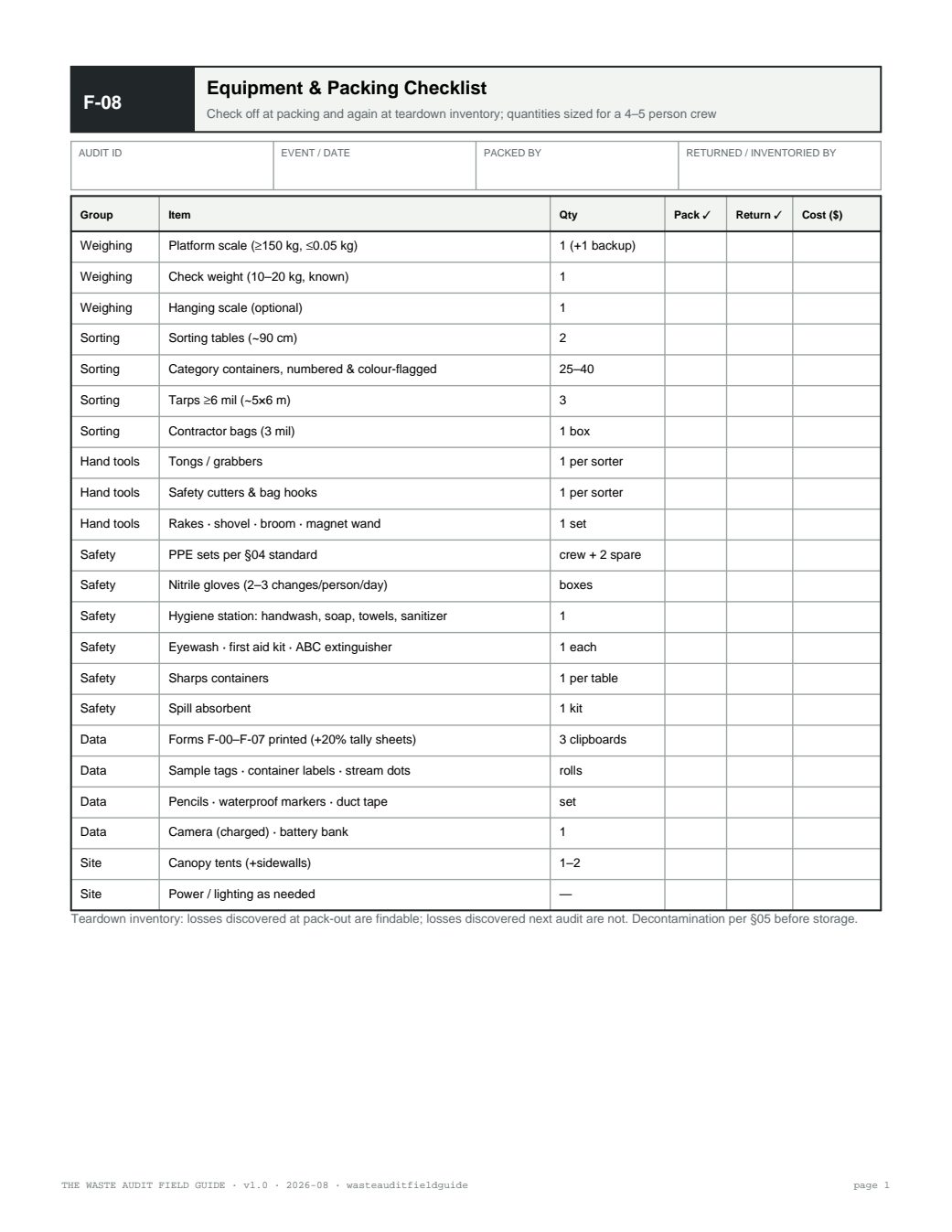
F-08 · Equipment & Packing Checklist
The full checklist above as a printable form: check-off on packing, check-off on teardown inventory, and a costing column for procurement.
PDF — click the sheet or the buttonRelated forms
Site suitability is assessed on F-01 (Pre-Audit Site Survey, §08), which records access, surface, water, ventilation, and the host facility's requirements. Scale verifications are logged on the F-03 tally sheet header. Container tares are recorded on F-03 before sorting begins.
Sources & further reading
- ASTM International — D5231-92(2016) (apparatus provisions: scale resolution, sorting containers, sorting-area requirements)
- Ontario Ministry of the Environment — A Guide to Waste Audits and Waste Reduction Work Plans (practical equipment and procedure guidance for ICI audits)