Health & Safety
Hand-sorting mixed waste exposes crews to sharps, biological and chemical hazards, repetitive strain, and the ordinary risks of working around vehicles and equipment. This section sets out a complete safety program for a waste audit: the legal duties, the hazards and their controls, the personal protective equipment standard, the protocols for the materials that should never be hand-sorted, and the emergency procedures that must be in place before the first bag is opened.
Legal duties
In both countries, the organization conducting the audit carries occupational health and safety obligations toward everyone on the sort floor. In Canada, occupational health and safety is regulated provincially (in Ontario, under the Occupational Health and Safety Act), and employers owe a general duty to take every precaution reasonable in the circumstances for the protection of a worker. In the United States, the OSH Act's General Duty Clause requires employers to furnish a workplace free from recognized hazards likely to cause death or serious physical harm. Three practical implications follow for audits:
- A documented hazard assessment is expected. A job hazard analysis (JHA) completed before the audit — and reviewed on site the morning of the sort — is the accepted evidence of due diligence.
- Volunteers and students carry the same duty of care. Crews drawn from student groups or community volunteers require the same PPE, training, and supervision as paid staff; several jurisdictions treat unpaid workers as workers for OHS purposes. Institutional crews may additionally require ethics or risk-management sign-off from the sponsoring organization.
- Host-site rules apply concurrently. An audit conducted at a transfer station, depot, or loading dock is subject to the host facility's safety program — site orientation, traffic rules, and PPE minimums — in addition to the audit's own.
Hazard identification
The table below catalogues the hazard classes encountered in waste sorting, their typical sources, and the primary controls. It is the starting point for the site-specific JHA, not a substitute for one — every site adds hazards of its own.
| Hazard class | Typical sources in a sort | Primary controls |
|---|---|---|
| Sharps | Needles and syringes, broken glass, razor blades, metal edges, ceramics | No blind reaching; tongs for suspect material; cut-resistant gloves; sharps containers at every table; needlestick protocol posted |
| Biological | Food decomposition, pet and human waste, hygiene products, mould spores, bioaerosols released when bags are opened | Glove discipline; no food or drink in the sort area; handwash station; respiratory protection where dust or mould is visible; vaccination review |
| Chemical | Household hazardous waste, unlabelled containers, batteries (thermal runaway), pool chemicals, pesticides, leaking liquids | Set-aside procedure — containers are never opened; WHMIS/GHS awareness; spill absorbent on hand; ventilation for indoor sorts |
| Suspected drug waste | Unidentified powders and residues, drug paraphernalia; fentanyl and analogues present a specific exposure concern | Powders and paraphernalia are not handled; the area is set aside; naloxone kit and trained personnel where the stream warrants it |
| Physical / laceration | Compressed and springing material, protruding objects when tipping, bag-cutting | Controlled tipping technique; cut away from the body; cut-resistant gloves; eye protection |
| Ergonomic | Repeated lifting of sample containers, sustained standing, reaching across tables, wrist strain from bag opening | Waist-height tables; lift limits and team lifts; task rotation; anti-fatigue matting; scheduled breaks |
| Environmental | Heat and humidity, cold, UV exposure, precipitation, poor ventilation indoors | Shade or shelter; work–rest cycles matched to conditions; hydration; weather thresholds for postponement |
| Site & mobile equipment | Collection vehicles, loaders and forklifts at transfer stations; compactors; public traffic near curbside collection | Cordoned sort area; high-visibility apparel; spotters; no entry into containers or compactors under any circumstance |
| Psychosocial | Occasionally distressing finds (deceased animals, biomedical items, personal effects) | Briefing sets expectations; any crew member may step away without explanation; supervisor handles set-asides |
Applying the hierarchy of controls
Controls are selected in a fixed order of preference. PPE appears last not because it is unimportant, but because it is the layer that remains after every stronger control has been applied.
The PPE standard
The following specification is the working minimum for anyone touching material. Items are specified by the standards printed on the equipment itself, so procurement can verify compliance at purchase. Canadian (CSA) and U.S. (ANSI/ASTM) designations are given together.
| Item | Specification | Standard reference | Notes |
|---|---|---|---|
| Eye protection | Safety glasses with side shields; goggles where splash is anticipated | CSA Z94.3 · ANSI/ISEA Z87.1 | Worn at all times in the sort area, including by recorders and observers |
| Hand protection | Cut-resistant outer glove worn over a disposable nitrile inner glove | ANSI/ISEA 105 (cut level A4 or higher) · EN 388 | The nitrile layer provides the biological barrier; the outer glove provides cut resistance. Outer gloves are inspected at each break and replaced when damaged; nitrile changed whenever torn and at every break |
| High-visibility apparel | Vest or garment appropriate to the traffic environment | CSA Z96 (Class 2) · ANSI/ISEA 107 (Type R, Class 2) | Class escalates per the host site's traffic plan where mobile equipment operates |
| Footwear | Safety-toe, puncture-resistant sole | CSA Z195 · ASTM F2413 (with PR designation) | Waterproof recommended; no exposed mesh uppers |
| Body protection | Long sleeves and full-length pants at minimum; disposable coveralls or aprons for heavily soiled streams (organics, mixed garbage) | — | Work clothing is removed or covered before leaving the site; contaminated disposables are bagged on site |
| Respiratory protection | NIOSH-approved N95 filtering facepiece where dust, visible mould, or heavy organic decomposition is present | NIOSH 42 CFR 84 | Respirator use in a formal program requires fit-testing; where a crew cannot be fit-tested, dust suppression and ventilation take priority and heavily contaminated loads are set aside rather than sorted |
| Hearing protection | Plugs or muffs where the sort operates inside an active transfer station or near equipment | CSA Z94.2 · ANSI S3.19 | Follow the host facility's posted requirements |
Sharps and the needlestick protocol
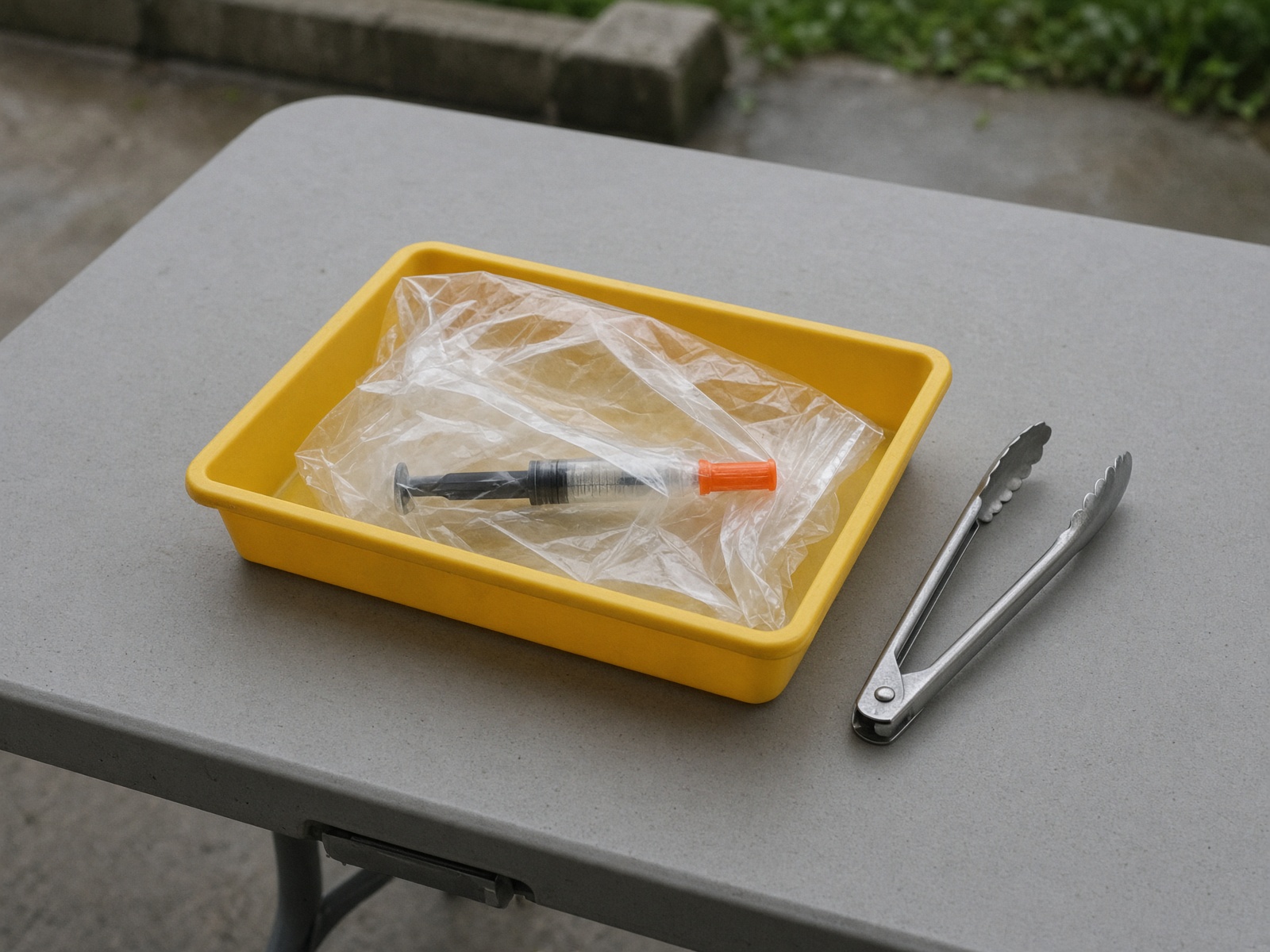
Sharps are the characteristic injury risk of waste sorting, and the controls are procedural as much as protective. Three rules govern the sort floor: no hand ever reaches where the eye cannot see (bags are cut open and contents spread — never searched by feel); any suspect material is moved with tongs, not fingers; and a rigid, puncture-proof sharps container sits within reach of every sorting table, emptied only by the supervisor to a proper disposal route.
If a needlestick or other percutaneous exposure occurs, the response sequence is: allow the wound to bleed freely, then wash thoroughly with soap and running water (eyes or mucous membranes: flush with water or saline for several minutes); report immediately to the supervisor; and seek medical evaluation urgently — same day, and as soon as practicable, since post-exposure prophylaxis for some bloodborne pathogens is most effective when started quickly. The device is retained in a sharps container for assessment where feasible, the incident is documented on the incident report form, and workers' compensation notification follows the jurisdiction's timelines. Crews should confirm before the audit which clinic or emergency department will receive an exposed worker, so no time is spent deciding on the day.
Biological hazards and hygiene
Mixed waste carries decomposing food, hygiene products, pet waste, and — once bags are opened — bioaerosols and mould spores. The hygiene protocol is the principal control, and it is behavioural: gloves stay on in the sort area and come off before touching anything personal; faces are not touched with gloved hands; no food, drink, gum, vaping or smoking anywhere in the sort area; hands are washed with soap and water (or sanitizer where water is unavailable, followed by washing at the first opportunity) at every break and at day's end. A dedicated hygiene station — handwash, sanitizer, eyewash, first aid kit, and a clean area for breaks — sits away from the sort tables and upwind of the tipping area, as positioned in the site layout (§05).
On vaccination: occupational guidance for workers handling municipal waste commonly recommends confirming that tetanus immunization is current, and hepatitis B vaccination is frequently recommended for personnel with ongoing exposure to potentially contaminated sharps. Individual advice is the province of an occupational health provider; the audit plan's role is to raise the question with the crew before the field day, not on it.
Chemical hazards and unknown containers
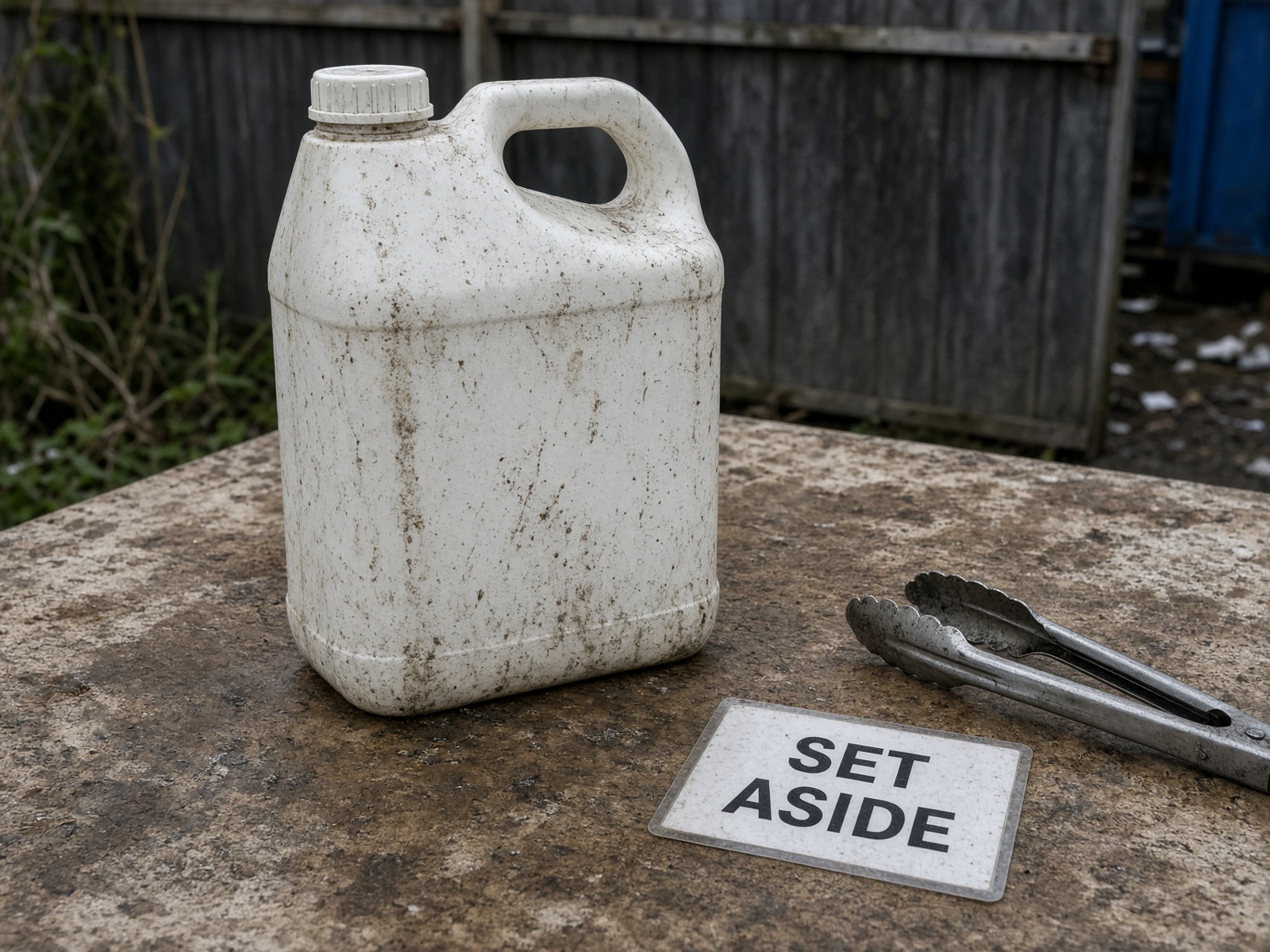
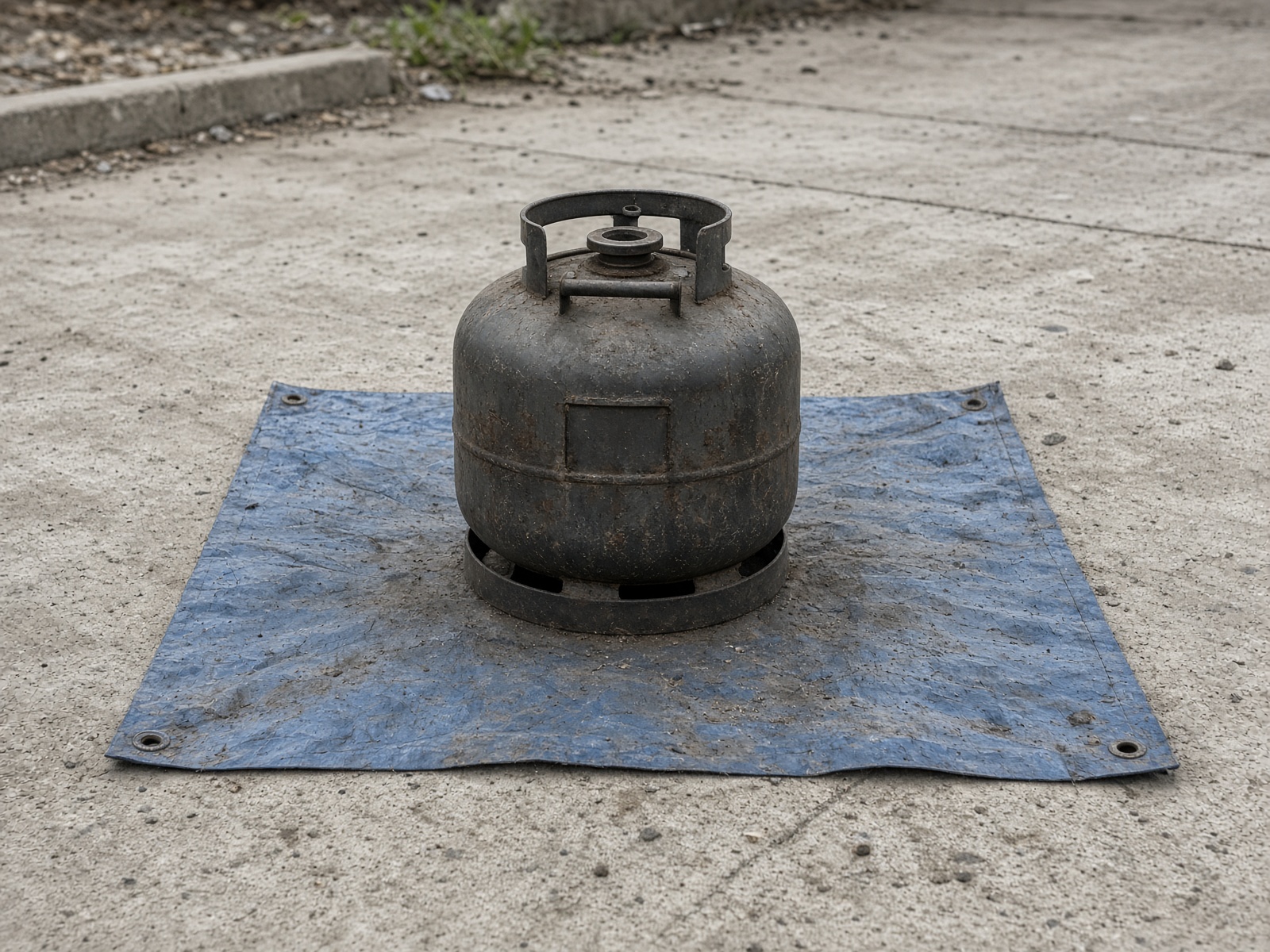
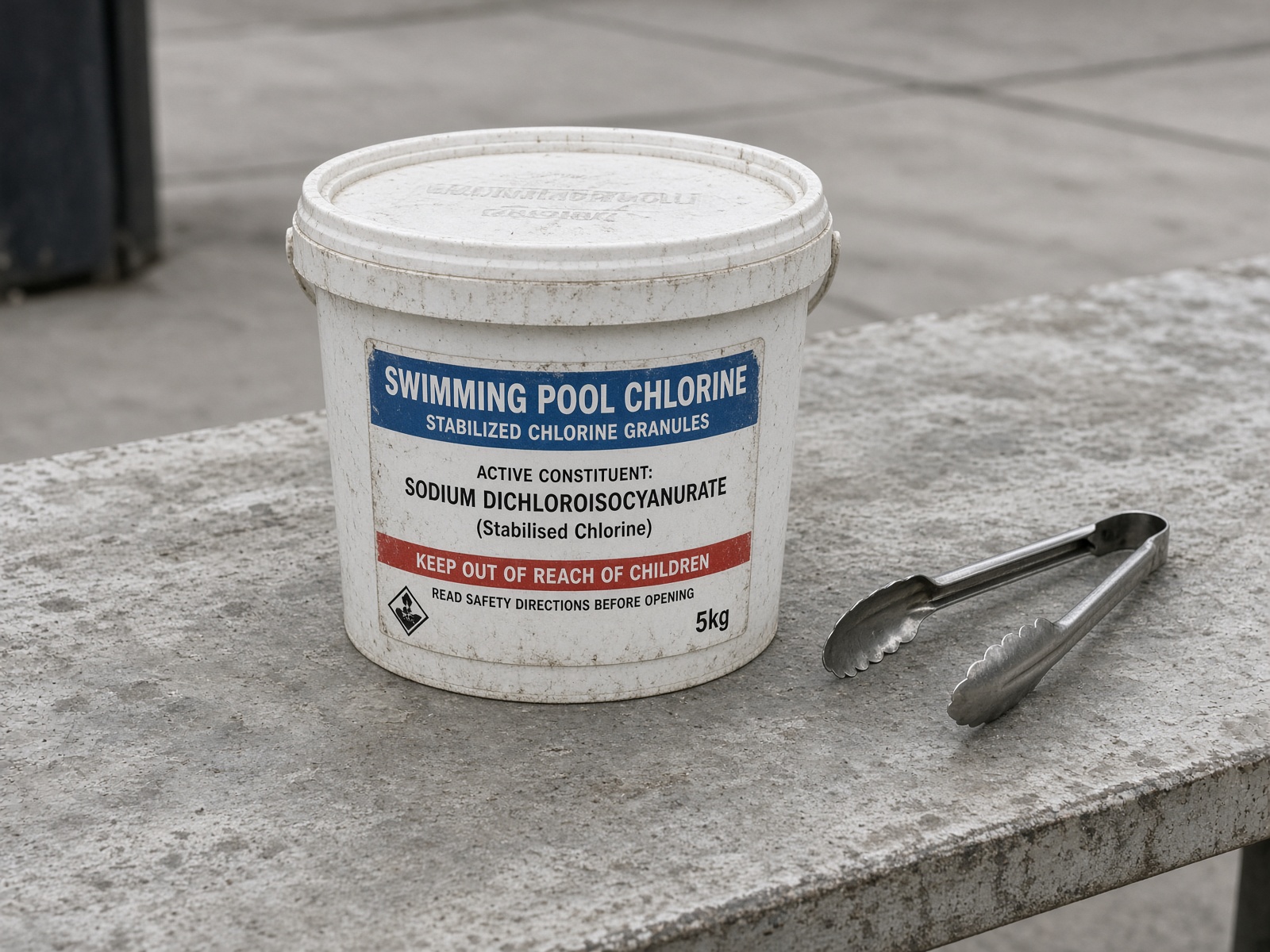
The rule for containers is uniform: they are not opened. Unlabelled jugs, spray cans, propane cylinders, chemical containers and batteries move directly to the set-aside area. Damaged lithium batteries deserve specific mention — physical damage can initiate thermal runaway hours later, so they are set aside on a non-combustible surface away from the sorted piles. Crews working indoor sorts confirm ventilation before starting; a spill kit with absorbent and a bagged disposal route stands ready for leaking liquids; and WHMIS/GHS pictogram awareness is included in the briefing so that crews recognize labelled hazards on sight.
Suspected drug waste
Unidentified powders, drug paraphernalia, and suspected drug packaging are treated as a distinct hazard class because of the potency of fentanyl and its analogues. They are never handled, brushed, or blown clear; the immediate area is set aside and the supervisor manages it. For streams where such finds are plausible — public-space bins, some multi-residential and shelter-adjacent collections — the safety plan should consider stocking a naloxone kit and ensuring at least one crew member is trained in its use, consistent with the host organization's policies. Any suspected exposure (unexplained drowsiness, respiratory depression) is treated as a medical emergency.
Ergonomics
A sort day is six hours of repetitive material handling, and strain injuries are more common than any dramatic hazard. The controls are built into the site and the schedule rather than left to individual technique. Sorting surfaces are set at approximately waist height (roughly 90 cm) so material is moved across, not lifted from, the table. Sample containers are filled to a manageable weight — as working guidance, no routine single-person lift above approximately 20–25 kg, consistent with common ergonomic lifting guidance, and heavier containers are team-lifted or split. Sorters rotate positions (table, tipping, weighing, recording) on a set schedule rather than on request; anti-fatigue matting is placed at standing stations; bag-cutting uses hooks or safety cutters rather than repeated wrist-twisting; and breaks are scheduled, not earned.
Environmental conditions
Outdoor sorts inherit the weather, and thresholds are set in the plan rather than negotiated on the day. For heat, the humidex ranges used in Canadian guidance provide a workable scale:
| Humidex | Guidance for the sort |
|---|---|
| Below 30 | Normal operations; water available throughout |
| 30–39 | Scheduled water breaks every rotation; shade over sort tables; monitor crew |
| 40–45 | Strenuous tasks curtailed; extended work–rest cycles; consider shortening the sort day |
| Above 45 | Postpone — the sample can usually be held a day; the crew cannot be un-injured |
Cold and precipitation carry their own provisions: insulated gloves compatible with the cut-resistance requirement, a heated break space, shortened rotations below freezing, and a rain plan (tents or an indoor fallback) decided in advance — wet paper also biases weights, so weather protection serves data quality as well as the crew (§09 addresses moisture bias). Sunscreen and UV protection are part of the summer kit. All-day forecasts are checked the day prior, and the postponement decision belongs to the supervisor alone.
Site and mobile equipment
The sort area is physically cordoned — cones, tape, or barriers — and mobile equipment does not enter it while the crew is working. At transfer stations and depots, the audit follows the host's traffic plan: designated walking routes, spotter requirements, and equipment right-of-way. Two absolute rules stand regardless of site: no person enters a compactor, roll-off, or collection vehicle body under any circumstance, including to retrieve a sample — material comes out to the crew, never the reverse; and compactors or balers adjacent to the sort are locked out per the host facility's procedure while the crew works nearby. A charged fire extinguisher (ABC) is stationed at the sort area, with crew shown its location at the briefing.
Emergency preparedness and incident reporting
Before the first bag is opened, the following are in place and known to every crew member: a stocked first aid kit and at least one crew member with current first aid certification; an eyewash bottle or station at the hygiene point; the address of the site written where everyone can see it (for emergency dispatch); the nearest emergency department identified, with a designated driver and vehicle; supervisor and host-site emergency contacts exchanged; and the incident report form on the clipboard. Every injury, exposure, and near-miss is recorded on the day it occurs — near-misses especially, since they are the least expensive lesson a safety program ever receives. A brief end-of-day debrief (what happened, what nearly happened, what changes tomorrow) closes each field day.
The pre-sort briefing
The briefing is delivered by the supervisor at the start of every field day — including for returning crews — and takes roughly ten minutes. A scripted version is provided in the resource library so its content does not depend on memory. It covers, in order: the day's objective and sample plan; the hazard assessment for this site; the no-hand-sort list, with examples held up; PPE check, done as a buddy inspection; the sharps and exposure protocol, including where an exposed worker will be taken; hygiene rules; lifting and rotation plan; emergency assembly point and first aider identification; and the standing rule that any crew member may pause the sort for a safety concern without justification.
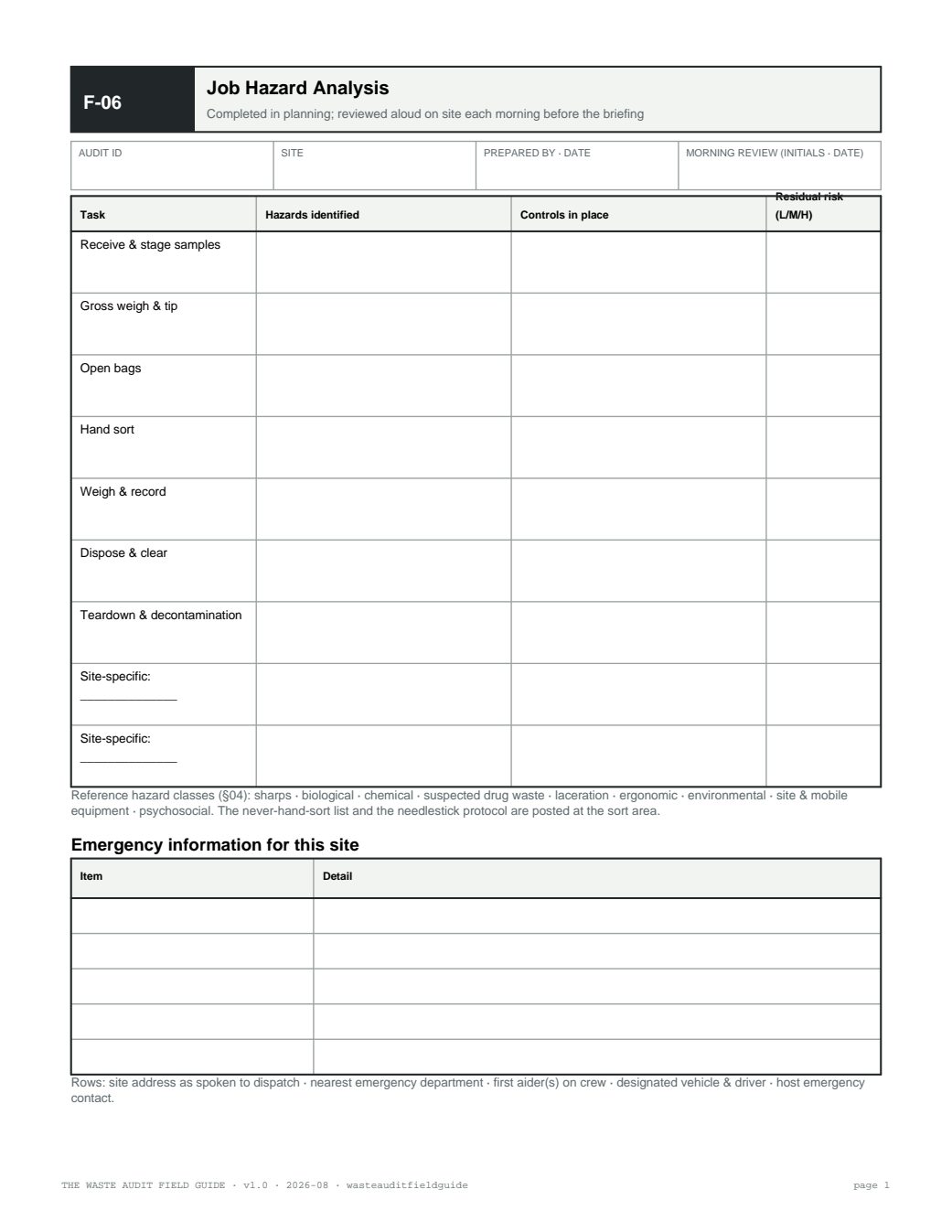
F-06 · Job Hazard Analysis
Task-by-task hazard and control worksheet, completed in planning and reviewed on site each morning.
PDF — click to download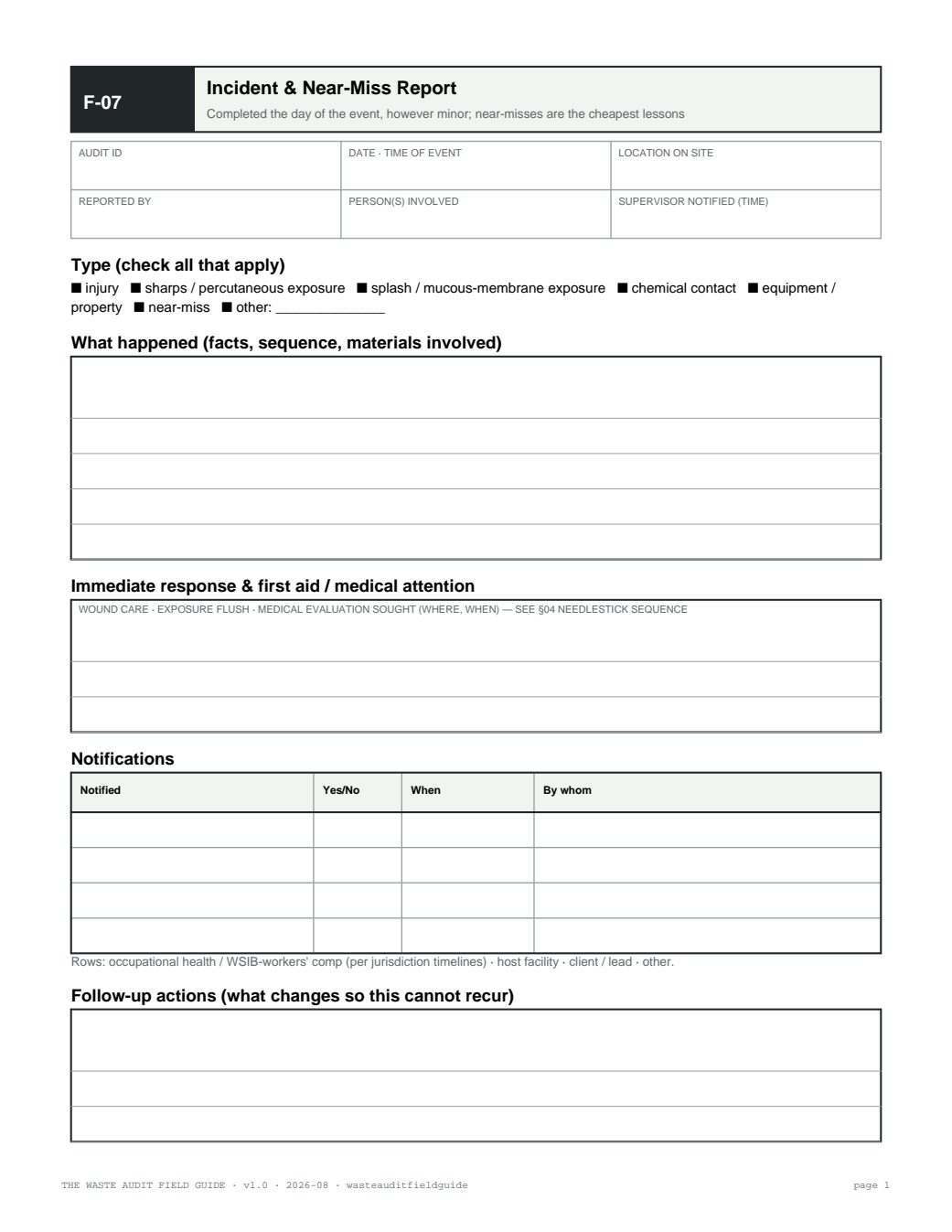
F-07 · Incident & Near-Miss Report
Injury, exposure, and near-miss record with follow-up actions and notification checklist.
PDF — click to download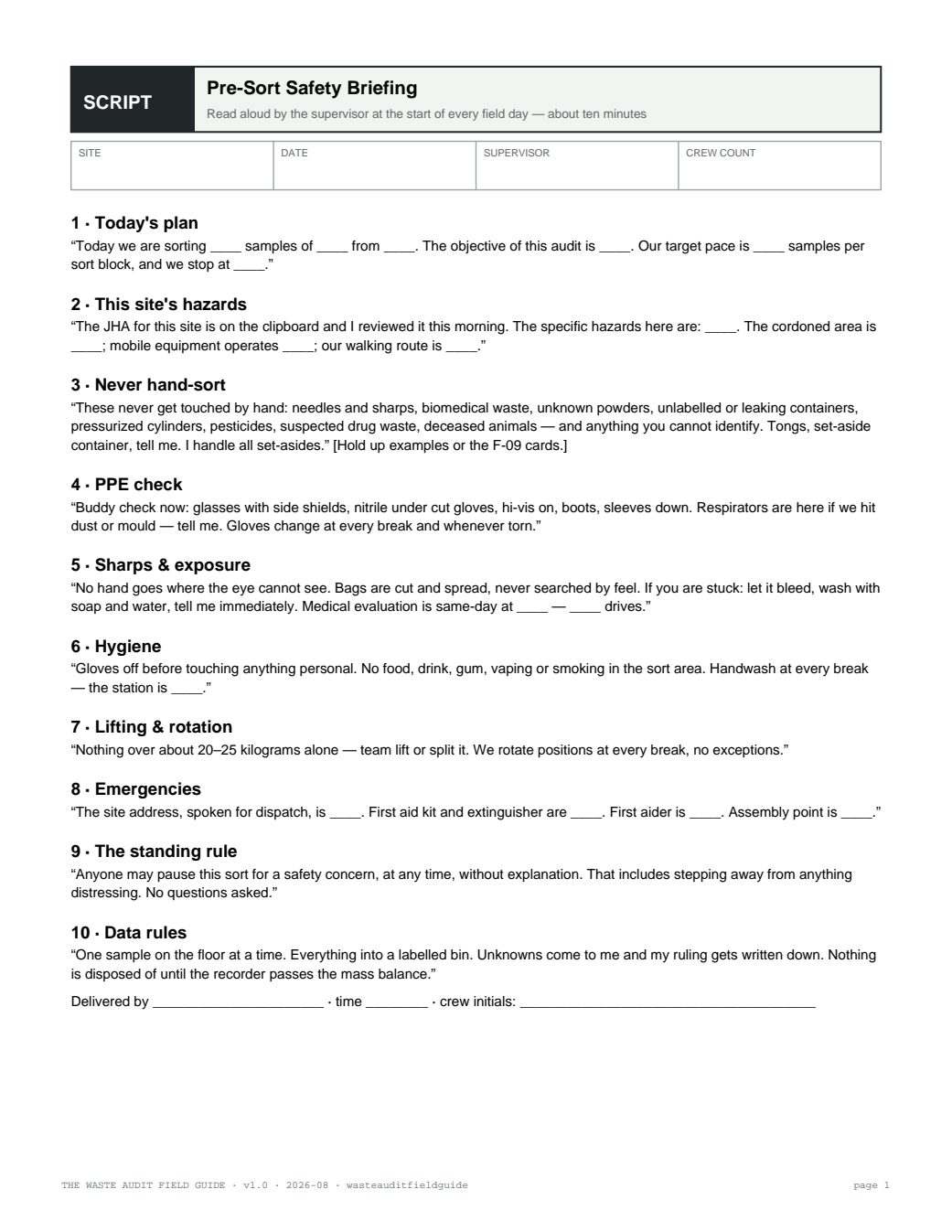
Pre-Sort Briefing Script
The ten-minute briefing, written to be read aloud, with site-specific blanks to complete.
PDF — click to downloadSources & further reading
- Canadian Centre for Occupational Health and Safety — occupational hygiene, PPE, and heat-stress guidance (including humidex-based response ranges)
- U.S. OSHA — OSH Act General Duty Clause; Ontario — Occupational Health and Safety Act
- NIOSH — respirator approval (42 CFR 84) and manual lifting guidance
- PPE standards as marked on equipment: CSA Z94.3 / ANSI Z87.1 (eye), ANSI/ISEA 105 & EN 388 (cut resistance), CSA Z96 / ANSI/ISEA 107 (high-visibility), CSA Z195 / ASTM F2413 (footwear), CSA Z94.2 (hearing)